


There exists a quiet space within professional practice that demands continuous reflection: the delicate dynamics of power within the coaching relationship and the subtle, unexamined impositions that silently slip into our awareness.
We customarily speak of coaching as an endeavor dedicated to Client Autonomy. Yet paradoxically, within a discipline designed to foster human self-determination , practitioners can — with complete subtlety and no ill intent — inadvertently dismantle the agency of the individual sitting before them. In the coaching space, an unmistakable systemic resonance connects Coach and Client. Any unexamined restlessness, fear, or attachment within the internal landscape of the Coach silently ripples across the field, shaping the external dialogue.
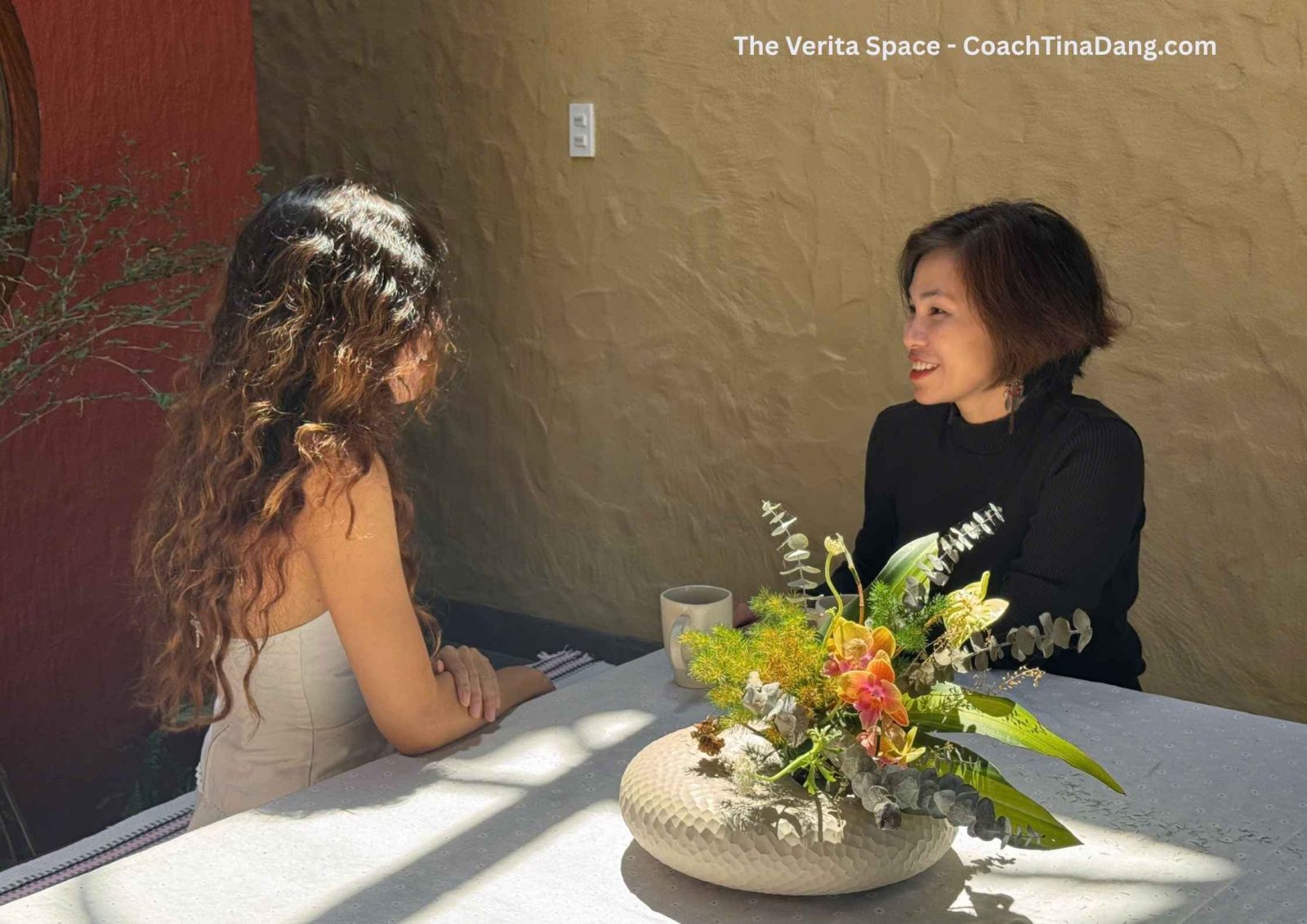
Consider a familiar scenario: A client hesitates, noting, "I keep postponing a direct conversation with my line manager..." before sinking into a prolonged silence. As the quiet stretches past ten or fifteen seconds , an immediate cognitive assessment takes shape inside the Coach: "Fear of conflict.". More critically, this diagnostic label triggers an underlying wave of anxiety: "Why is this silence persisting? We are midway through the session without a discernible breakthrough. If I do not intervene now, the session risks stagnation.".
At this juncture, should the practitioner fail to embody Coaching Presence (Competency 5) , they become governed by an unstable internal Being. To alleviate their own discomfort with the void, the Coach deploys a sequence of rapid interrogations: "What causes this fear?", "Where does this fear originate?", "If fear were absent, what would you utter?".
While technically structured , the client never articulated the concept of "fear.". They might have been discerning timing or attuning to internal emotions. However, driven by an unexamined fear of inadequacy , the Coach projected a hypothesis , employing inquiry as an elegant tether to draw the client into their own conceptual framework. When the practitioner’s Being is characterized by attachment or apprehension , technique transforms into understated imposition — compromising Establishing and Maintaining Agreements (Competency 3) and distorting the client's autonomous inquiry.
This awareness, however, warrants self-compassion rather than self-reproach. Identifying these subtle departures marks the beginning of deeper mastery. Rather than engaging in internal struggle , we leverage a Coaching Mindset (Competency 2) to observe, contain, and set aside these inner movements through Reflective Practice. Where blind spots prove substantial, the ICF Code of Ethics and competency benchmarks invite us to engage with a Mentor Coach or Supervisor to restore internal clarity.
Unexamined, the trap of power manifests with remarkable sophistication. It may arise from Attachment to Outcome — where a client seeks to explore deeper emotional currents, yet the Coach, tethered to the initial agenda, redirects them back toward structured action. It may stem from intellectual vanity, where the Coach falls in love with their own analytical acumen — identifying patterns early and steering inquiries so the client echoes the Coach's conclusion, turning the session into a pursuit of the Coach's insight rather than Evoking Awareness (Competency 7). Or it may reflect organizational pressures (Sponsor/Corporate) , subtly impinging upon Confidentiality & Conflict of Interest (Code of Ethics) , shaping the client to fit institutional expectations rather than honoring their organic evolution.
External impasse rarely concerns methodology or instrumentation. External friction almost invariably originates from internal constriction. When internal discomfort arises, a Coach may reflexively introduce models or exercises to regain control , converting the session into a display of technique where tools govern rather than human transformation. The critical inquiry in such moments is not "Is this tool effective?", but rather: "What inner necessity compels me to direct the client toward a specific destination at this exact moment?".
ICF literature draws a fundamental distinction between Influence and Imposition. The Presence of a coach inevitably exerts influence — a profound pause, a focused observation, or a timely challenge are all legitimate expressions of influence. Yet for influence to emancipate rather than constrain, it demands an exceptionally grounded and transparent state of Being.
A practitioner operating from a grounded Being demonstrates:
The stillness to hold Silence (Competency 6: Listens Actively) without needing to fill the void.
The detachment to accommodate shifting objectives (Flexibility - Competency 3) without anxiety over structure.
The humility to suspend personal hypotheses, Creating a Safe and Supporting Environment (Competency 4) for the client's self-emergence.
Ultimately, the enduring question for continuous practice is not "Did I execute the technique impeccably today?", but rather:
"In this moment, is my state of Being offering a spacious vessel for the client’s autonomy — or is my unexamined anxiety fostering their reliance upon my direction?"
Coaching is not the application of technique to modify the surface. It is the offering of a grounded, spacious Being as an anchor , enabling the client to cultivate unwavering trust in their own capacity to discern, decide, and Facilitate Client Growth (Competency 8).


