


Within the timeless current of Eastern Zen philosophy lies a profound lesson about the way we deploy our energy in every action.
Many of us operate under the illusion that pouring our entire mind, anxiety, and non-stop calculations into work from dawn till dusk is the ultimate mark of devotion. Under the lens of Zen, however, this is nothing short of an unconscious drain on our vital reserves.
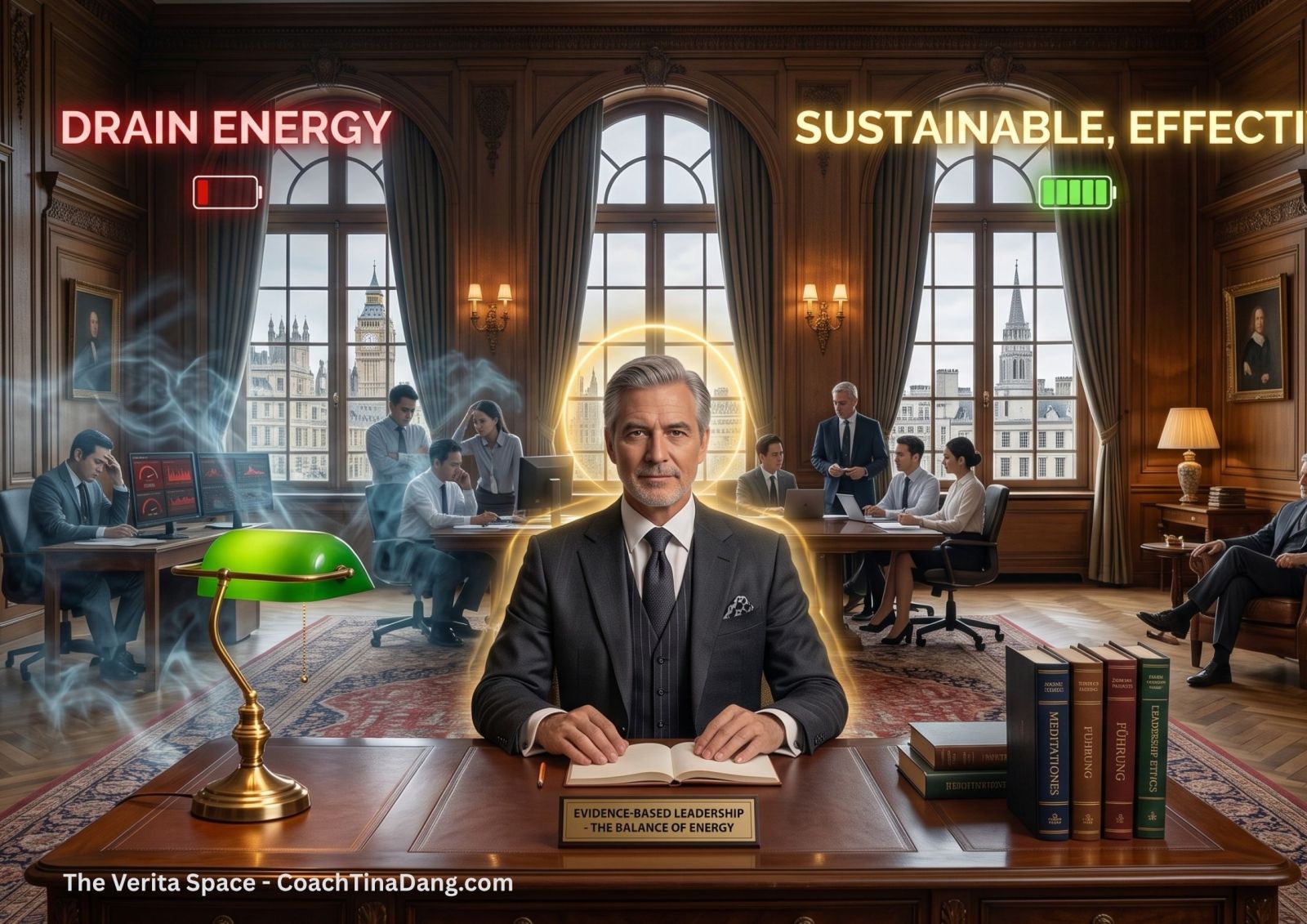
We shoulder immense responsibilities, yet allow the work itself to sweep away our inner calm. We sacrifice peace and mental freedom, constantly whispering to ourselves: "Once this project wraps up, I’ll rest," or "Once I hit this milestone, I’ll finally be happy." Ultimately, we turn our work—originally a vessel for creating value—into a chain that binds us.
True freedom does not depend on whether you do little or much, but on whether you allow yourself to be bound and carried away by the task. "Letting go" in practice does not mean abandoning responsibility or stepping away from your duties; it means relinquishing the attachments, fixations, and redundant noise while at work.
Looking at the landscape of modern leadership, the evolution from a hyper-performing manager (A-Plus) to a truly wise and exceptional leader (A) lies in the capacity to remain conscious of one's internal dynamics.
A leader achieves the A state when they begin to observe and identify:
What internal force is driving me to overthink, overcalculate, and obsessively do something on autopilot—even when it is completely unnecessary?
It might be a subtle fear of failure, an underlying insecurity, or the Ego's urge to control everything.
This obsessive over-calculation operates precisely like a background process on a device. You are not actively solving a task, yet your mind keeps spinning, quietly draining your essential vitality. When the time comes to make pivotal strategic decisions, you find yourself exhausted, frayed, and depleted of clarity.
When burnout sets in, many executives resort to quick fixes: extra caffeine, motivational seminars, or brief retreats. Yet, Eastern wisdom points toward a far more foundational path: shut down the energy leaks.
Accumulation through non-waste: When you recognize background overthinking and drop idle worries when they aren't needed, your energy naturally preserves itself. You don't need to "recharge" aggressively because your core vitality was never truly lost—just leaked.
Action in presence: You continue to steer the enterprise and tackle complex challenges, but with ease and composure. Work is addressed with total presence in the moment, rather than through frantic anxiety about the future.
True autonomy: A leader grounded in Zen knows precisely when to deploy energy—and when to return the mind to a quiet, receptive space.
Work becomes a burden only when we allow unconscious fears and overthinking to take the helm.
Learning to lay down redundant calculations is how you reclaim command over your energy. Once freed from background depletion, you unlock the clarity, resilience, and composure required to shift your organization from A-Plus back to A—deploying just enough energy with full awareness, minimizing hidden loss, and easing the path to recovery in the most natural, grounded way.


